The sound of a car pulling into the driveway should not be able to stop your breath. But for a whole year, it stopped mine.
I was in the slow, early undoing of a marriage, living in a house that had quietly stopped feeling safe. There was so much mistrust by then, so many lies, that my body had learned one lesson down to the bone: someone is coming. And the instant I heard tires on the gravel, that lesson fired. My chest would seize. The words would leave me. A great held sigh would climb from my belly toward my throat and simply stop there, as if the breath itself had frozen on the way up. Part paralysis, part panic, part a terror I had no name for.
I did not have language for my experience back then. Ten years ago, no one was talking about nervous system regulation. I only knew that I went still and wordless at the sound of a car pulling into the driveway, signaling someone is coming, again and again. The therapist I was seeing, as good and necessary as that work was, never quite named what was happening in my body.
And then one afternoon, a car pulled into the driveway, but this time it was my best friend. I felt my body begin its old brace in the chest, the held breath, the going small, and for the first time, something in me answered it. No. Not this time. This is someone we love. This is someone safe. And I took the breath I had not been able to take in over a year, and sent it all the way down into the frozen places in my body.
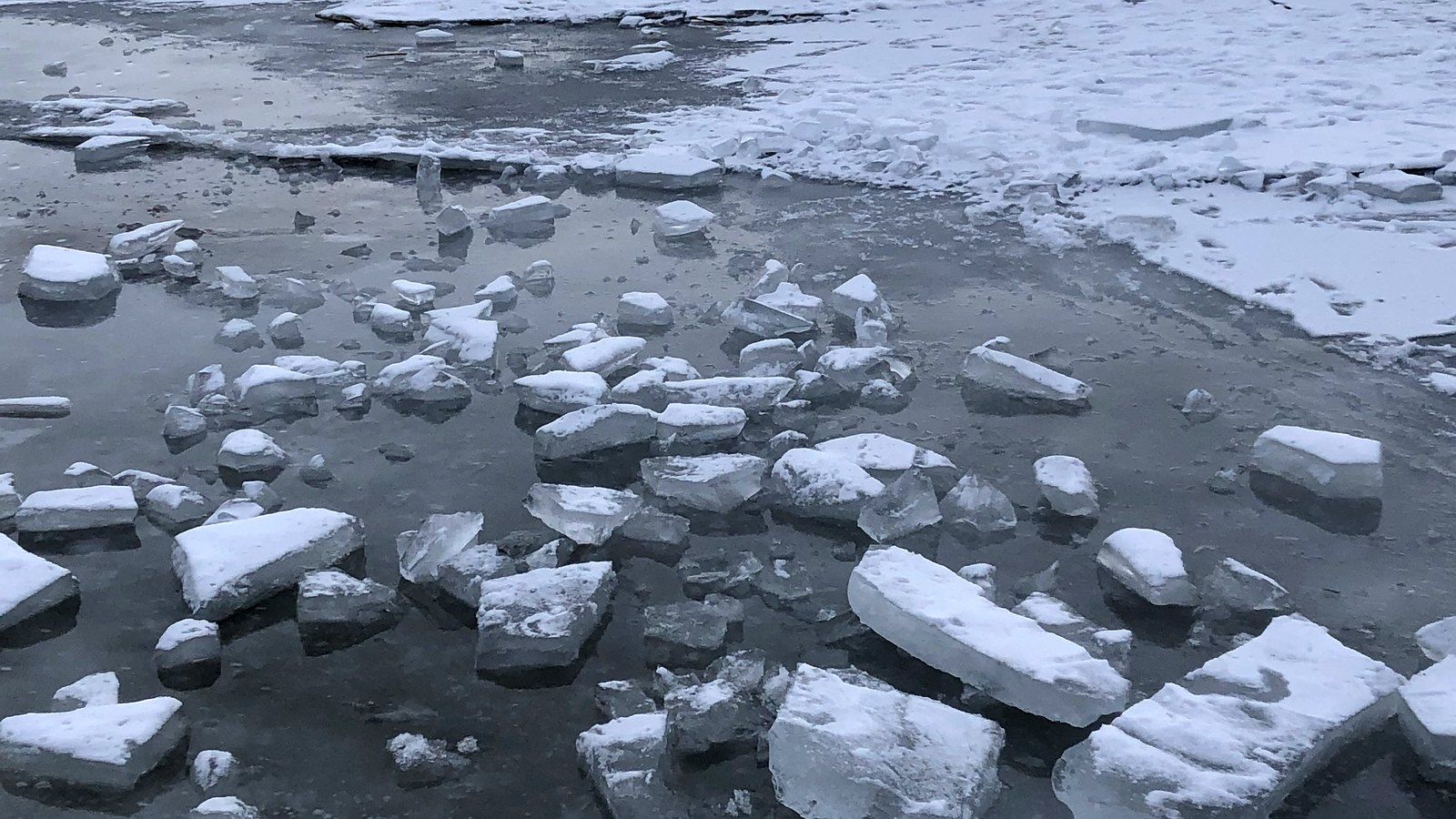
That was the first thaw. That was the day I understood the freeze was not who I was. It was something my body was doing to protect me, and it could learn, slowly, to do something else.
If your body freezes at a sound, a name, a knock, a certain hour of the day, and you have been quietly wondering what is wrong with you, hear this before anything else: nothing is wrong with you. You are not broken, or depressed, or lazy, or too much. You are frozen. And a frozen thing can thaw.
What a functional freeze actually is
Most of us know about fight or flight. The freeze is the third one, the response no one talks as much about, and it is the one that hides in plain sight.
Freeze is your nervous system’s oldest protection. When a moment feels like too much, when there is a danger you cannot fight and cannot outrun, the body does the only thing left. It goes still. It holds its breath. It makes itself small, quiet, still and unseen. This learned way is probably how you survived a home, a marriage, a childhood, a year you could not otherwise have lived through.
But a freeze that helped you survive does not always leave when the danger does. It stays in the body, waiting, and it returns at the smallest cue. Day to day, it can feel like being wired and exhausted at the very same time. Like going through the motions with the lights off inside. It shows up as foggy thinking, as a strange numbness, as a heaviness in the limbs you cannot explain. These are not character flaws. They are the quiet signs of a body still holding an old brace.
Freeze is not depression, and it is not laziness
This is the part I most need you to hear, because it is the part almost everyone gets wrong.
When you are stuck in freeze, others may say you are depressed, or broken, or lazy, or simply not trying hard enough. I believed every one of those things about myself. But the exhaustion, the numbness, the not being able to begin, so often that is not a mood and not a failing.
It is a nervous system in shutdown, doing exactly what it was built to do.
The difference matters, because you cannot think your way out of a freeze, and you cannot shame your way out of one either. You cannot push through it or productivity-hack your way past it. A frozen body does not need criticism. It needs to be met, and slowly, gently, shown that the danger is finally over.
Why your doctor, and even your therapist, can miss it
I want to be careful here, because the therapy I did was valuable and necessary. But there was a whole piece it never reached.
Good therapy walked me through the logistics of a life coming apart. What does it mean to divorce? What are the steps? How do you raise your children through it, how do you build a new life? All of that is real and important, and all of it lives in the thinking mind. So I would leave the office with my head full of steps, and none of it prepared me for what happened the instant I heard a car in the driveway.
This is why a freeze so often gets missed, or renamed. It gets called anxiety. It gets called depression. And because the body’s part is left out of the conversation, the imprint only deepens. The more it goes unspoken, the louder it grows, until it starts to show up as the fog, the dissociation, the bone-tiredness that no amount of understanding ever seems to touch.
Your body kept the score, in the fascia
Here is what took me years to learn. The memory of what happened does not only live in your mind. It lives in your body, held in the fascia, that fine webbing of tissue that wraps every muscle, and in the deeper layers beneath it.
For me, the imprint was simple and merciless. Car in the driveway equaled my ex-husband. My ex-husband equaled mistrust, lies, being made to doubt my own reality. My body had made that connection hundreds of times, so of course it braced at the sound. I was not being dramatic.
I saw it in my own anger too. I grew up in a home where the only permitted feelings were happiness and a little sadness, where anger meant someone was about to get hurt, and where the eruptions came without repair. So the frozen child in me learned that her anger was dangerous, and she locked it down deep. That is how this works.
The body stores the sequence, and it runs the old program long after the danger has passed.
Which means healing is not about erasing the memory. It is about teaching your body a new one. It is a tandem thing, body and mind and whole self taking a breath together and beginning to see with new eyes: that was then, this is now, and right now, in this moment, I am safe.
How to come out of freeze: the Rewild and Rise method
So how do you actually move a frozen body? Not by force. Never by force. A frozen thing does not open because you demand it to. It opens because you make it safe enough to soften on its own.
This is the sequence I have woven together over nineteen years of this work, for myself and for the people I sit with. I call it Rewild and Rise, and the order matters more than anything.
One. Come back. Breathe your way into the frozen place, so your body knows you have not left it alone. You do not need a dramatic breath. Even one slow breath, sent down into the held place in your chest or your belly, is enough to begin. The smallest movement, when you have been frozen, is not small at all.
Two. Rewild into it. Feel your way home to the sensation, and listen. Name it: the clench, the held breath, the racing heart, the shoulders up around your ears. Then track it. When does the freeze come? What time of day, who is in the room, what were you doing? You are listening for the pattern, the old story living in the body. This listening is the rewilding itself, the slow return to the wild, original you that was always meant to live inside your own skin, not braced above it.
Three. Tell it the truth. Place one hand on your heart and one on your belly, and offer your body only what is true. “Thank you for protecting me. In this moment, I am safe.” But say it only if it is real. If your body is still flooded and you tell it that it is safe, it will not believe you, and it should not. So find the smaller truth instead: “Thank you for this information. My feet are on the floor. I can feel the ground holding me.” Stay with a truth your body can actually receive, and let the sense of safety build from there.
Four. Rise. Once the story has been heard and the body has been told the truth, let the wild move. This is the release, and it wants to be big. Let it. Shake. Scream. Dance. Lie on the floor and kick your legs like a child. Go down to the river, put your arms around a cottonwood tree, and rage. Run, lift something heavy, move through yoga. The form does not matter. What matters is that the energy that has been frozen finally gets to move, and that your aliveness rises back up through you: connection, creativity, curiosity, the parts of you a frozen body simply cannot reach.
A word on the order, because it is everything. If you skip straight to the running or the workout, you can bypass the most important part. You will get the rush of feel-good chemicals that says everything is fine, but you will not have touched the root. This is where so much nervous-system advice quietly fails: it soothes the symptom without ever listening to the story. Breathe first. Listen next. Then move.
You are your own greatest healer
Here is the truest thing I know, and I want you to carry it out of here with you.
You are not alone, and you are not strange. We are biologically built to store the imprints of what has hurt us in the body. Watch the wild for a moment. When an animal is injured or frightened, it does not paint on a smile and carry on. It shakes. It roars. It lets the fear move all the way through. In some species the others gather around and simply witness while it trembles and moves and comes back to itself. We are animals too, two-legged ones, and we need the very same mechanisms to release what we have carried.
And once you can do this, once you can breathe, name the sensation, and track why it comes, something shifts forever. You have the information now. You are the expert of your own body, your own history, your own lived experience. Not your doctor. Not even your therapist. You become your own greatest healer. I am only ever a guide who helps you remember that the authority was always yours.
A gentle first step
If any of this read like your own life, if you recognize your frozen places in mine, there is a soft way to begin, and you do not have to do it alone.
You can book a free discovery call, twenty unhurried minutes, no pressure and nothing to sell. Just space to be heard, and to feel what it is like to have someone sit with you while your body remembers it is safe.
You have been frozen for a long time. You are not broken. And a frozen thing, held gently enough, always begins to thaw.
A gentle note: I am a somatic and energy practitioner, not a licensed therapist. This work walks alongside healing and growth, and it is not a replacement for therapy or medical care. Many of the people I sit with do both, and that is a good and beautiful thing.